
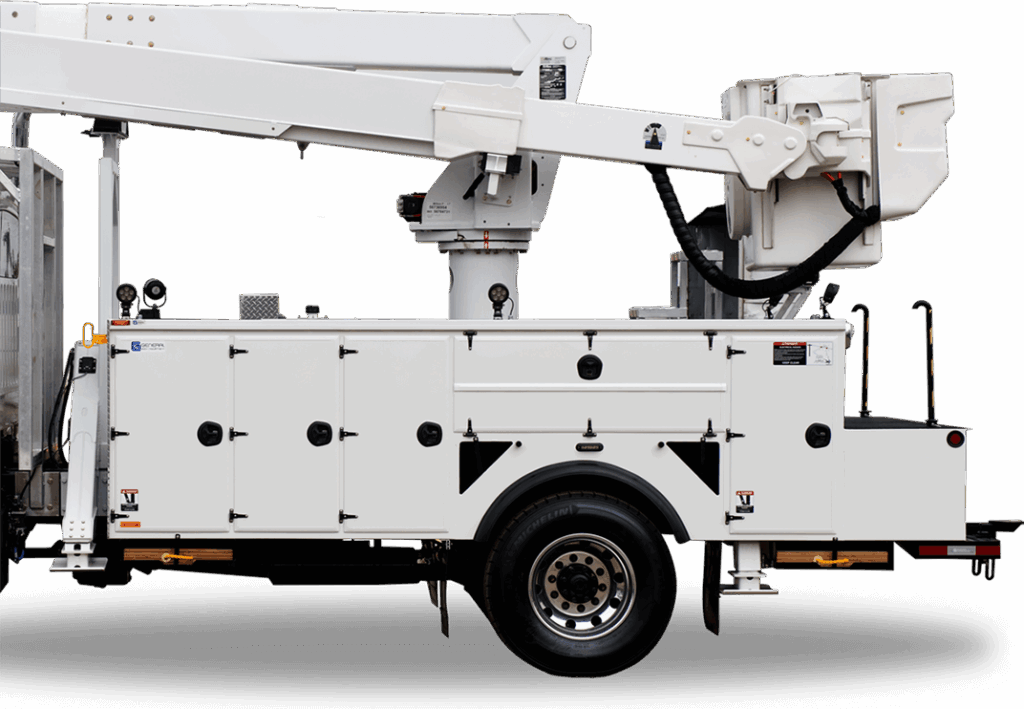
Understanding GVWR & Payload When Upfitting
Optimize Load, Avoid Liability
Service Truck Bodies Built for Performance, Compliance, and Competitive Advantage
In today’s competitive trades environment, mobile technicians are no longer just service providers. They are fully equipped operations on wheels. Electricians, HVAC specialists, mechanics, plumbers, millwrights, and heavy equipment technicians rely on their trucks as rolling workshops. The performance of that truck directly impacts productivity, safety, liability, and profitability. At General Body & Equipment, dedication to truck body manufacturing is not just about steel and structure. It is about helping Alberta businesses stay ahead of their competition by building Service Truck Bodies for Mobile Technicians that maximize payload capacity, protect GVWR truck compliance, and ensure proper truck upfitting compliance from the start.
When load distribution is optimized and liability risks are reduced, technicians work faster, fleets operate safer, and companies protect their bottom line.
This is where the difference lies.
The Role of Service Truck Bodies in Modern Field Operations
A service truck body is not simply an add on. It is an operational platform. Every drawer, compartment, crane mount, fuel tank, compressor bracket, and tool rack affects weight distribution and total vehicle mass.
Businesses that ignore this reality often experience:
-
Premature vehicle wear
-
Suspension failure
-
Increased fuel consumption
-
Safety risks
-
Regulatory penalties
-
Insurance complications
General Body & Equipment works directly with businesses during the planning phase to ensure the finished build aligns with:
-
Manufacturer GVWR truck ratings
-
Intended payload capacity
-
Alberta Department of Transportation regulations
-
Fleet safety standards
-
Real world job site demands
By aligning manufacturing expertise with operational strategy, companies avoid costly mistakes that compromise long term performance.
Understanding GVWR Truck Ratings and Why They Matter
GVWR stands for Gross Vehicle Weight Rating. It is the maximum allowable weight of a fully loaded truck, including:
-
The truck chassis
-
The service truck body
-
Fuel
-
Tools
-
Equipment
-
Cargo
-
Driver and passengers
Exceeding GVWR truck limits creates serious risks.
Overloading can lead to brake failure, steering instability, tire blowouts, axle damage, and legal exposure. In Alberta, roadside inspections can result in fines, vehicle impoundment, and compliance violations if trucks exceed rated capacity.
At General Body & Equipment, every Service Truck Body build begins with understanding:
-
The base chassis specifications
-
Planned equipment installations
-
Future tool expansion
-
Expected job site loads
Manufacturing decisions are then aligned to protect payload capacity while staying within truck upfitting compliance requirements.
This is not guesswork. It is calculated planning.
Manufacturing with Purpose: Built Around Payload Capacity
Payload capacity is often misunderstood. Many businesses purchase a truck based on engine power or towing capacity without fully calculating how much usable weight remains after installing a service body.
For example:
If a chassis has a GVWR of 14,000 lbs and weighs 9,000 lbs empty, the available payload capacity is 5,000 lbs. Once a steel service body, crane, compressor, and fuel tank are installed, that remaining capacity can shrink dramatically.
General Body & Equipment addresses this challenge during the manufacturing phase by:
-
Selecting material thickness appropriate to workload
-
Designing structural reinforcements only where required
-
Positioning heavy equipment to balance axle loads
-
Coordinating crane mounting with chassis limits
-
Advising on tank placement and storage distribution
The goal is simple: optimize load, avoid liability.
By thinking ahead during truck body manufacturing, businesses protect long term durability and compliance.
Truck Upfitting Compliance and Alberta Regulations
Alberta commercial vehicles must adhere to weight and safety regulations governed by the Alberta Department of Transportation. While enforcement policies evolve, compliance fundamentals remain consistent:
-
Axle weight limits must not be exceeded
-
Gross weight must remain within manufacturer ratings
-
Equipment must be properly mounted and secured
-
Lighting and visibility standards must be maintained
-
Modifications must not compromise structural integrity
Improper truck upfitting compliance can void warranties and expose companies to liability in the event of an accident.
General Body & Equipment collaborates with customers to ensure builds align with regulatory expectations. By working directly with business owners and fleet managers, the team ensures service truck bodies are manufactured to meet real world compliance standards.
It is not about building the heaviest body possible. It is about building the right body for the application.
The Cost of Ignoring Load Optimization
When companies overlook weight planning, the financial consequences add up quickly.
Common long term impacts include:
-
Increased brake replacement cycles
-
Suspension failures
-
Frame stress cracks
-
Reduced fuel efficiency
-
Insurance complications
-
Lower resale value
Beyond mechanical wear, there is reputational risk. A breakdown on site affects client confidence. A compliance violation affects brand credibility.
By investing in professional truck body manufacturing that accounts for GVWR truck limits and payload capacity planning, businesses prevent avoidable downtime and protect their market position.
Designing Service Truck Bodies for Mobile Technicians
Mobile technicians depend on efficiency. The layout of a service truck body can either improve productivity or slow it down.
General Body & Equipment focuses on:
-
Compartment sizing based on tool profiles
-
Reinforced shelving systems
-
Secure drawer assemblies
-
Weather resistant sealing
-
Strategic crane integration
-
Ladder and material rack positioning
-
Fuel tank and compressor accommodation
Each decision affects both daily workflow and overall weight distribution.
For example, placing heavy welders or hydraulic equipment on one side of the truck can unbalance axle loads. Proper distribution maintains safer handling and reduces long term suspension strain.
This is manufacturing with operational intelligence.
Supporting Fleet Growth and Competitive Advantage
Companies that prioritize proper truck body manufacturing gain measurable advantages:
-
Reduced downtime
-
Fewer compliance issues
-
Longer vehicle lifespan
-
Safer driving performance
-
Improved technician efficiency
-
Stronger brand image
In competitive industries, operational reliability becomes a differentiator.
When a fleet operates efficiently and remains compliant, businesses can confidently take on larger contracts and expand service areas.
General Body & Equipment supports this growth by ensuring each Service Truck Body aligns with business goals rather than limiting them.
Embedded GVWR Load Calculator Concept
To support informed decision making, General Body & Equipment encourages businesses to calculate projected vehicle weight before finalizing a build.
A simplified GVWR truck planning formula:
-
Start with manufacturer GVWR rating
-
Subtract curb weight of the chassis
-
Subtract estimated service body weight
-
Subtract crane and mounted equipment weight
-
Subtract tool and cargo estimate
-
Subtract fuel and passenger weight
The remaining number represents usable payload capacity.
If the result approaches zero or becomes negative, adjustments must be made before manufacturing proceeds.
An embedded GVWR calculator on your website can help customers evaluate their configuration before contacting your team. This strengthens SEO, supports technical buyers, and positions General Body & Equipment as a thought leader in truck upfitting compliance.
Material Selection and Structural Integrity
Truck body manufacturing is not about excess weight. It is about strength where required.
General Body & Equipment carefully considers:
-
Steel gauge selection
-
Reinforcement placement
-
Weld integrity
-
Corrosion protection
-
Coating durability
-
Long term exposure to Alberta weather
Structural rigidity is critical, especially when cranes are mounted. Load transfer must not compromise chassis integrity.
By aligning material decisions with application demands, service truck bodies remain durable without unnecessarily consuming payload capacity.
Liability Reduction Through Smart Manufacturing
Liability exposure increases when overloaded trucks are involved in collisions. Insurance investigations often review:
-
GVWR truck ratings
-
Axle weight distribution
-
Modifications performed
-
Compliance documentation
If a vehicle exceeds manufacturer ratings, companies may face legal complications.
General Body & Equipment helps businesses reduce risk by ensuring builds respect truck upfitting compliance standards from the beginning.
Optimized manufacturing protects:
-
Drivers
-
Technicians
-
Fleet managers
-
Business owners
-
End customers
Avoiding liability is not optional. It is strategic.
Staying Ahead of Industry Trends
The service industry is evolving. Mobile technicians now carry more diagnostic tools, heavier equipment, and advanced power systems.
As demands increase, so does the importance of precise truck body manufacturing.
General Body & Equipment remains focused on:
-
Future proofing builds
-
Advising on scalable configurations
-
Supporting electric and hybrid considerations
-
Enhancing weight efficiency
-
Improving structural longevity
By aligning manufacturing with industry trends, businesses remain competitive and adaptable.
Why Technical Buyers Choose General Body & Equipment
Technical buyers search for terms such as:
-
Service Truck Body
-
GVWR truck
-
payload capacity
-
truck upfitting compliance
-
truck body manufacturing Alberta
They are looking for clarity and expertise.
General Body & Equipment delivers:
-
Professional consultation
-
Compliance focused planning
-
Alberta specific awareness
-
Real world field knowledge
-
Manufacturing precision
This approach builds trust and long term relationships.
Built for Alberta Conditions
Operating in Alberta means dealing with:
-
Extreme temperature shifts
-
Road salt exposure
-
Gravel and debris impact
-
Long highway travel distances
-
Remote job site conditions
Service truck bodies must withstand these realities.
General Body & Equipment manufactures bodies designed for durability and longevity in Canadian environments. Structural integrity, corrosion resistance, and weight distribution are all considered in context of real field conditions.
The Manufacturing Commitment
Dedication to manufacturing means more than fabrication. It means partnership.
General Body & Equipment works with business owners, fleet managers, and operations teams to ensure every build:
-
Protects GVWR truck ratings
-
Preserves payload capacity
-
Meets truck upfitting compliance standards
-
Supports technician workflow
-
Strengthens competitive position
The result is a service truck body that enhances productivity rather than limiting it.
Protect Your Investment with Load Optimization
Overlooking weight planning is one of the most expensive mistakes a company can make. The right service truck body build protects long term investment and operational performance.
If your current fleet is nearing capacity limits or you are planning new builds, now is the time to review:
-
GVWR compliance
-
Axle weight distribution
-
Equipment placement
-
Payload forecasting
-
Future expansion needs
Call Us: 1-800-410-1613
Request A Quote
Visit Our Website: https://generalbody.ca/